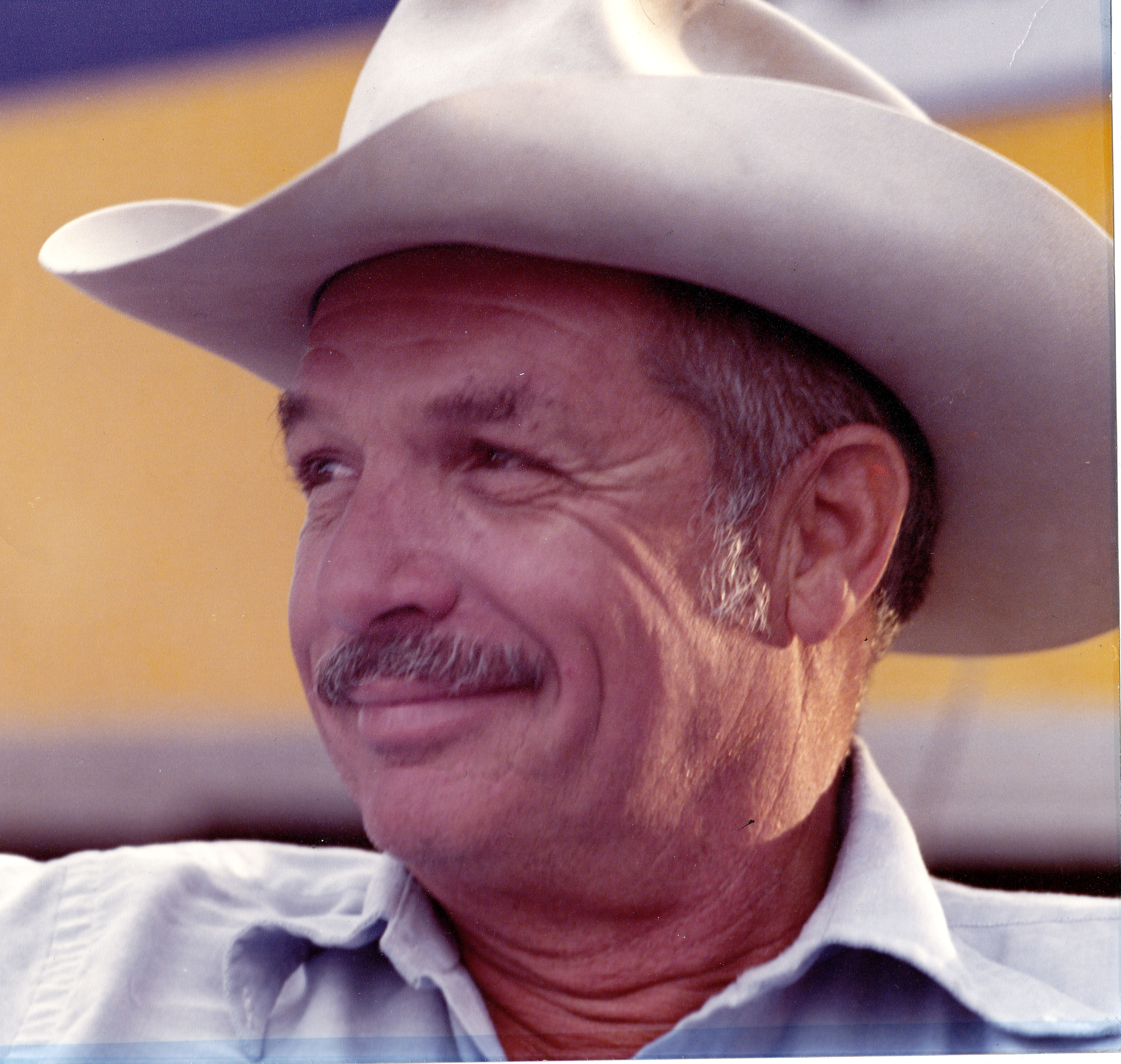
b. October 21, 1927 Tucson, Arizona
d. January 17, 2014 Tucson, Arizona
While in college he met the love of his life, a fellow student named Carolyn 'Keri' Gillett. They married in 1951 and after graduating, Rukie got a job, through Mary's family connections, with the Hercules Powder Company in Phoenix where he and Keri lived for many years. He sold dynamite in a territory including all of Arizona, Imperial County in California, Clark County in Nevada, and Hidalgo in Central Mexico, which meant he drove more or less 30,000 miles each year. Their three sons were born in Phoenix: Rukin III, Daniel, and Jimmy; after Rukin III was born, Rukie stopped being a traveling salesman and got involved with a friend in the cattle business, and then partnered with another friend to sell antique guns in the Pioneer Gun Shop in Phoenix and Scottsdale. He also was engaged in numerous community activities inclulding the Phoenix Thunderbirds, the Men's Art Council, the Maricopa Jeep Posse, and the YMCA. He always found time for family, and the boys remember their childhood as one adventure after another. The highlight for them was camping in Mexico where they fished and explored, discovered Indian artifacts, and traded meat and fish with the locals in exchange for clams and eggs.
In 1973 Rukie and Keri had grown tired of Phoenix, and they bought 80 acres of land in Lyle Canyon in the Canelo Hills; a year later, they bought the neighboring Diamond C ranch. They subsequently acquired the old Houston homestead in Elgin and the adjoining Triangle T originally owned by Walter Houston in the 1800s. They settled into an entirely new life, and Rukie operated the properties in partnership with his sons, assisted by their loyal ranch foreman, Joe Quiroga. Contrary to much of what what was happening around them, the Jelks were consolidating and expanding their land rather than selling it off or subdividing it. For the 2006 Arizona National Show, he and Keri were named Arizona Pioneer Stockman of the Year.
Rukie was well-known for his contributions to the community. In the 1940s he built one of Arizona's first burnt adobe homes that became the cornerstone of his development of Rillito Downs racetrack (listed in 2013 in the National Register of Historic Places). It was here that he and a fellow breeder, Melville Haskell, generated the formalized rules and regulations used for modern American Quarter Horse racing. He was chairman of the State of Arizona Parks Board and played a significant role in protecting Kartchner Caverns and placing it on the National Association of State Parks roster. He was a longtime member of Los Charros Desierto, often hosting their annual horseback rides, dressing up as a Mountain Man on occasion, and posing for the centerfold for their program one year. And after serving on the Advisory Board while he was in Phoenix, he was Chairman of the Board of the Arizona-Sonora Desert Museum in 1978-79.
According to son Jimmy, Rukie had an inquiring mind; "His interests ranged from exploring remote places to sailing the high seas and collecting antiques." Son Danny remembered that Rukie loved to sing and recite poetry and limericks, memorizing every word, and even from his hospital bed reciting the famous and complicated 1917 cowboy poem "Tying Knots in the Devil's Tail".
Above all, Rukie enjoyed a rich family life in the scenic setting of his beloved Arizona countryside. In addition to his three sons, he was blessed with ten grandchildren. He considered his life 'a great ride' according to all who knew him. At his death, his family asked to honor him with donations to The Arizona-Sonora Desert Museum or the Patronatos Mission San Xavier del Bac.
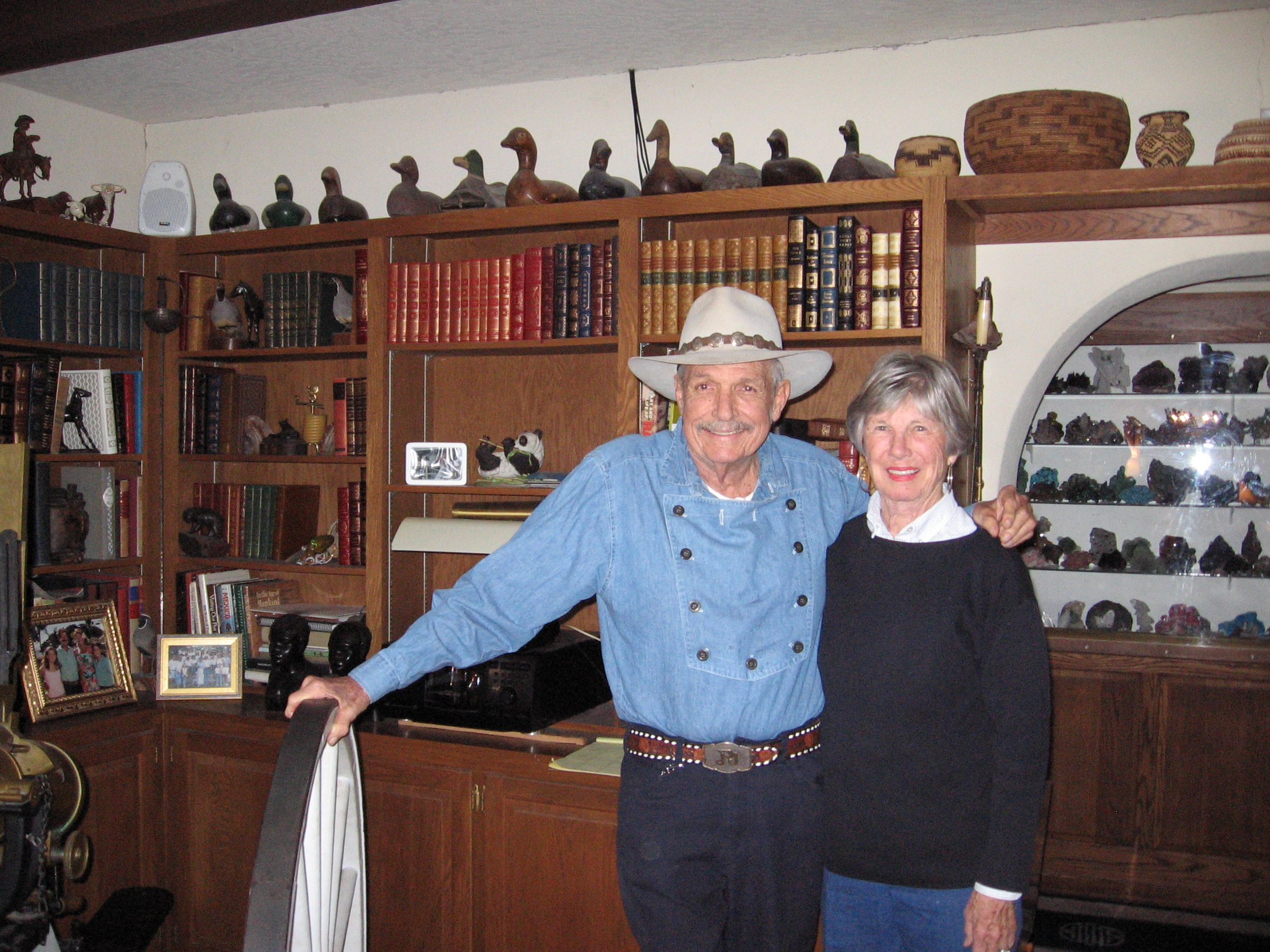
Rukie and Keri in their library
Written by Corbin Smith from sources including Betty Barr, FindAGrave, Volume XXIII of "Arizona National Arizona Pioneer Stockmen Ranch Histories", and "Inside Tucson Business", Februrary 1, 2013..
Click below to return to:
.jpeg)
History
A-D
E-H
I-P
Q-Z
SCS 8/11/26